
Physical and Logical Compression The distinction between physical and logical compression methods is made on the basis of how the data is compressed or, more precisely, how the data is rearranged into a compact form. The resulting block of compressed data is normally smaller than the original because the physical compression algorithm has removed the redundancy that existed in the data itself. Logical compression is accompllished through the process of logical substitution - that is , replacing one alphabetic, numeric, or binary symbol with another. Changing "United States of America" to "USA" is a good example of logical substitution.
Symmetric and Asymmetric Compression
A symmetric compression method uses roughly the same algorithms, and performs the same amount of work,
for compression as it does for decompression.
Asysmmetric methods requiere substantially more work to go in one direction than they requiere in
the other.
Lossy and Lossless Compression
In a lossless compression, when a chunk of data is compressed and decompressed, the original
information contained in the data has not been changed in any way.
Lossy compression methods, however, throw away some of the data in an image in order to
achieve compression ratios better than that of most lossless compression
methods.
Run-length encoding is a data compression algorithme that is supported by most bitmap file
formats, such as TIFF, BMP, and PCX.
RLE works by reducing the physical size of a repeating string of characters. The first
repeating string, called a run, is typically encoded in two bytes.
The first byte represents the number of characters in the run and it is called the
run count. The second byte is the value of the character in the run, which is
in the range of 0 to 255, and is called the run value.
Uncompressed, a character run of 15 A characters would normally requiere 15 bytes to
store:
AAAAAAAAAAAAAAAA
The same string after RLE encoding would requiere only two bytes:
Many facsimile and document imaging file formats support a form of lossless data compression often described as CCITT encoding. The CCITT (Intrnational Telegraph and Telephone Consultative Committee) is a standards organization that has developed a series of communications protocols for the facsimile transmission of black-and-white images over telephone lines and data networks.
JPEG(Joint Photographic Exprts Group) provides a compression method that is capable of compressing
continuous-tone image data with a pixel depth of 6 to 24 bits with reasonable speed and
efficiency.
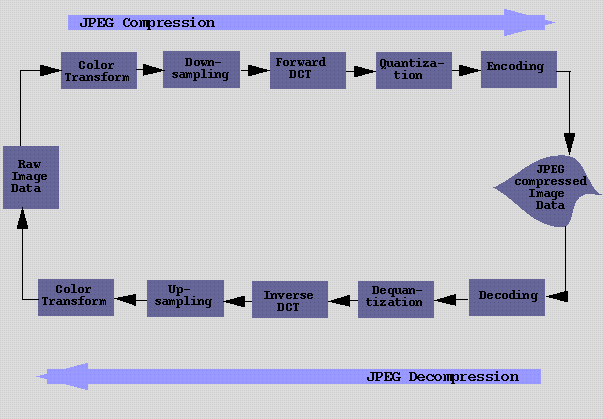
Example of Data Compression

Quiz And Assignment
Click here to submit Test #1.